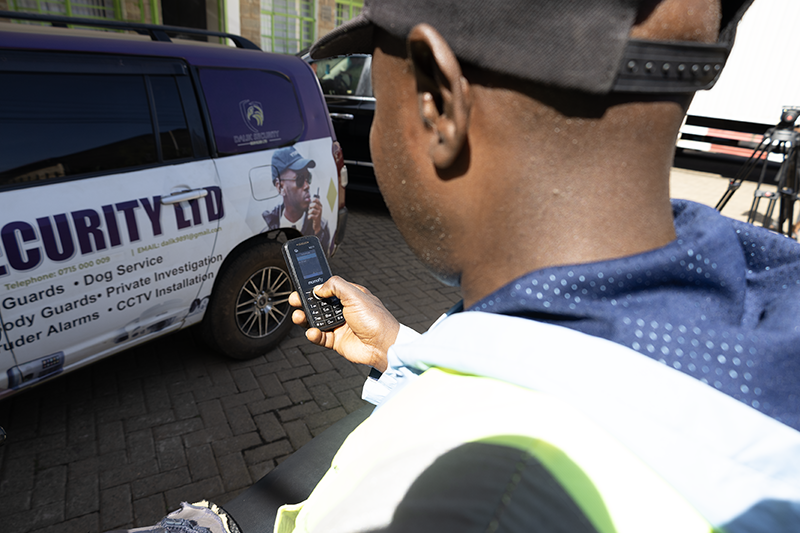
A loan application can now be assessed in seconds, sometimes before a borrower has finished putting their phone away. A digital lender may examine transaction patterns, repayment history, income information, and other available data, then produce a decision without a loan officer ever sitting across the table from the applicant. For a business owner who needs money to restock before the weekend, that speed can be useful. But when the answer is no, or the amount offered is far below what was requested, the borrower may have little idea what went wrong.
Kenya's new regulatory framework for non-deposit-taking credit providers brings this question into sharper focus. The Central Bank of Kenya (Non-Deposit Taking Credit Providers) Regulations, 2026, gazetted on 29 September, replace the earlier digital credit provider rules and extend oversight to a wider range of non-bank lending activities. The regulations do not apply to every financial institution: institutions licensed under the Banking Act, the Microfinance Act and the Sacco Societies Act are excluded and remain subject to their respective regulatory frameworks. One particularly important provision addresses the use of artificial intelligence in lending decisions.
The rules require lenders using AI in credit assessment to explain automated decisions, make clear when customers are interacting with AI, retain human oversight, and address discriminatory bias, transparency, accuracy and data security. This is a significant responsibility for lenders, because an automated system is not automatically a fair one simply because it applies the same process to every applicant.
Consider a trader who receives most payments through cash, or a small supplier whose business has grown but whose financial records are still incomplete. A scoring model trained on borrowers with regular digital transaction histories may interpret that absence of data as a warning sign. The trader may be perfectly capable of repaying a modest working-capital loan, yet the system could see a risk that is difficult to explain or challenge. The issue is not whether technology should be used; it is whether the people affected by its decisions can understand them and have a meaningful route to review.
There is also a wider responsibility for lenders. Credit decisions shape more than a company's loan book. They influence which businesses can buy stock, take on orders, replace equipment or survive a difficult month. If automated systems repeatedly favour applicants whose financial lives are already visible to formal institutions, digital lending could reproduce some of the exclusions it was meant to reduce.
For lenders, this means AI governance cannot be treated as a technical matter left entirely to software suppliers. Management must understand how models are used, what information informs decisions, how errors are identified and who is accountable when an outcome is questioned. Human oversight should mean more than having an employee available to repeat the computer's answer.
The same discussion matters in the wider microlending ecosystem. InNova Global Fund, for example, does not issue loans directly; it provides administrative infrastructure connecting participant capital with Kenyan partner platforms that issue microloans. In an environment where technology and data increasingly influence lending, clear responsibilities, reliable reporting and responsible practices across those relationships matter.
Kenya's new rules do not ask lenders to abandon automation. They ask a more useful question: can the efficiency of a machine be matched by the accountability expected of a financial institution? For borrowers, that distinction may determine whether digital credit becomes a genuine opportunity or simply another door that can close without explanation.
References
• https://www.cliffedekkerhofmeyr.com/en/news/publications/2026/Kenya/Corporate-Commercial/corporate-and-commercial-alert-28-october-New-rules-for-non-deposit-taking-credit-providers
• https://www.innovagf.com/about-innova