Beyond Hypergrowth: Fintech Enters Its Profitability Era
The first question investors used to ask the fintechs was simple: How fast are you growing? How many customers? How many transactions? How many countries?


When people talk about Africa's economic future, the conversation often revolves around billion-dollar infrastructure projects, foreign direct investment, and multinational corporations. These investments undoubtedly matter, but they can also overshadow another powerful force quietly transforming communities across the continent: the small business owner with a viable idea and just enough capital to bring it to life.
.png)

.png)


When people talk about Africa's economic future, the conversation often revolves around billion-dollar infrastructure projects, foreign direct investment, and multinational corporations. These investments undoubtedly matter, but they can also overshadow another powerful force quietly transforming communities across the continent: the small business owner with a viable idea and just enough capital to bring it to life.
Sometimes, the most meaningful economic change begins with one of the smallest financial commitments.
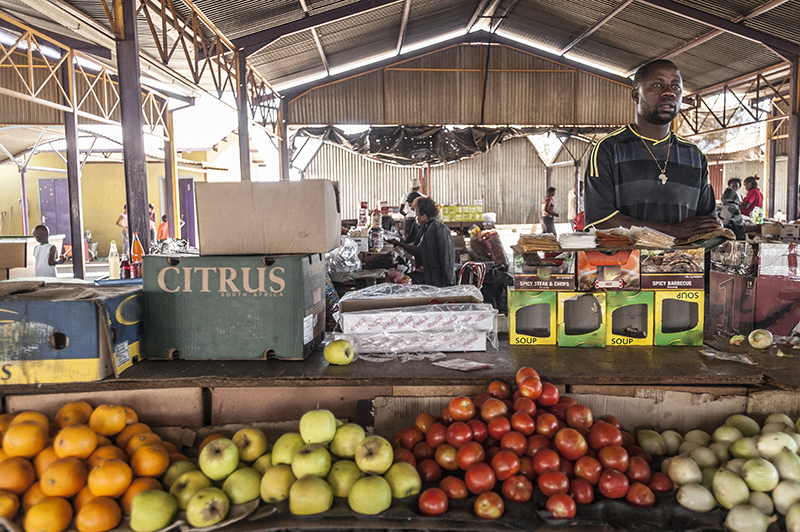
Across Africa, millions of micro, small, and medium-sized enterprises (MSMEs) form the backbone of local economies. They operate market stalls, repair shops, small farms, retail businesses, transport services, and family-run enterprises that provide livelihoods for entire communities. Yet many of these businesses face the same challenge—not a lack of ambition or ability, but limited access to affordable financing.
A modest microloan—often ranging from $5 to $500—can transform a small enterprise by funding inventory, upgrading equipment, scaling production, or creating a first job. While these adjustments may seem incremental individually, their collective impact across thousands of businesses drives sustained economic growth, job creation, and community resilience.
This is why microlending deserves far more attention than it often receives.
Unlike traditional financing, which may be out of reach for many small enterprises, microlending focuses on practical opportunities. It recognizes that entrepreneurs do not always need large amounts of capital to create meaningful impact. What they often need is timely access to financing that matches the scale of their business and their aspirations.
The ripple effects extend well beyond individual borrowers. As businesses grow, they create jobs, strengthen local supply chains, generate household income, and stimulate commerce within their communities. Over time, these outcomes contribute to broader financial inclusion and more resilient local economies.
Technology is making this process even more effective. Digital platforms, mobile payments, and data-driven lending models are helping financial service providers reach entrepreneurs more efficiently than ever before. Faster application processes, improved accessibility, and better risk assessment are opening doors for businesses that have historically been underserved by conventional banking.
This growing ecosystem also depends on organizations committed to strengthening local financial networks. InNova Global Fund, together with its Kenyan partner platforms, is part of this broader effort by supporting initiatives that expand responsible access to financing for entrepreneurs and small businesses. Their approach reflects an understanding that sustainable economic progress is achieved not simply by providing capital, but by helping build the financial infrastructure that allows enterprise to flourish over time.
As Africa's entrepreneurial economy continues to expand, the conversation should move beyond the size of individual investments and focus on the opportunities they create. Economic transformation is not always measured by headline-grabbing figures. It is often built with one business, one family, and one community at a time.
The world's smallest loans may never dominate financial headlines.
But they have the potential to unlock something far greater.
A generation of entrepreneurs with the opportunity to build Africa's future from the ground up.
References
InNova Global Fund – Mission, financial inclusion approach, and partnership model.
International Finance Corporation (IFC) – MSMEs and access to finance.
African Development Bank Group – Financial inclusion and private sector development.
GSMA – The Mobile Economy Sub-Saharan Africa – Mobile money and digital financial services.
https://www.gsma.com/mobileeconomy/sub-saharan-africa/
World Bank – Financial Inclusion Overview.
https://www.worldbank.org/en/topic/financialinclusion
Unlock Global Finance