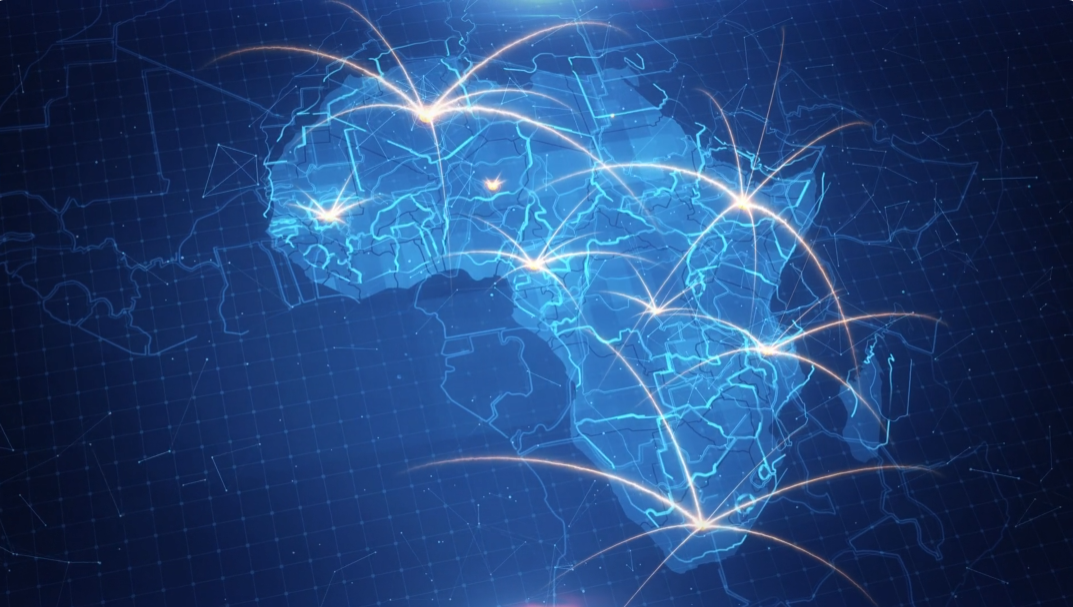
You can see a new highway. You can see a port being expanded. You can see cranes rising over a construction site. But some of the infrastructure that may have the greatest influence on Africa’s next decade is buried underground, running beneath the sea or sitting inside buildings most people will never enter.
That is the digital infrastructure behind the continent’s growing online economy. The investment is becoming harder to ignore. In September, Africa Finance Corporation and Vision International Investment Company announced a combined $300 million investment in WIOCC Group, with the money earmarked for expanding data-centre capacity, terrestrial fibre networks and subsea connectivity across Africa. A few weeks later, the U.S. International Development Finance Corporation announced its intention to join AFC and Vision Invest as an investor in WIOCC.
These are infrastructure investments, but they are also bets on what African businesses will need next. Cloud computing requires data centres. Artificial intelligence requires enormous amounts of computing capacity and connectivity. Digital payments depend on networks that can remain available when millions of transactions are taking place. Businesses trading across borders need reliable connections to customers, suppliers and financial systems.
The consumer sees an app. The investor has to see the infrastructure underneath it. Africa still has a long way to go. The International Telecommunication Union estimates that 35.7% of Africa’s population used the internet in 2025, compared with 73.6% globally. The gap is enormous, but it also explains why digital infrastructure remains such a large investment opportunity.
There is another reason these matters. Connectivity is increasingly becoming part of the cost of doing business. A company with an unreliable connection loses time. A digital lender cannot serve customers effectively if systems are constantly interrupted. A retailer cannot depend on electronic payments if the network keeps failing. A data-heavy company cannot expand if computing capacity is too expensive or too far away.
This makes digital infrastructure different from many technology investments. It does not need to become the next popular app to create economic value.
It simply needs to work. That is also where the connection with financial inclusion becomes interesting. InNova Global Fund operates behind the scenes rather than as a consumer-facing lender. Its current model connects participant capital with Kenyan partner platforms, while its administrative systems support the flow of capital and reporting around those microlending activities.
That may seem far removed from fibre networks and data centres. It is not. Modern financial systems increasingly depend on the same digital infrastructure: connectivity, data, software, identity systems and reliable back-end technology. The stronger that infrastructure becomes, the easier it becomes for financial services to reach businesses that traditional systems have struggled to serve.
Africa’s next infrastructure story, therefore, may not always involve concrete and steel. Some of it will be measured in kilometres of fibre, subsea capacity, computing power and data stored closer to the people using it. Unlike a highway, much of it will remain invisible, and that does not make it less important, it may make it easier to underestimate.
References
• Africa Finance Corporation — WIOCC Group secures strategic investment from AFC and Vision Invest
• Africa Finance Corporation — WIOCC welcomes U.S. DFC as investor
• ITU DataHub — Individuals using the Internet, Africa 2025
• InNova Global Fund — About InNova


.png)

.png)