By: Rendi Nyangua
The Quiet Build Behind the Headlines
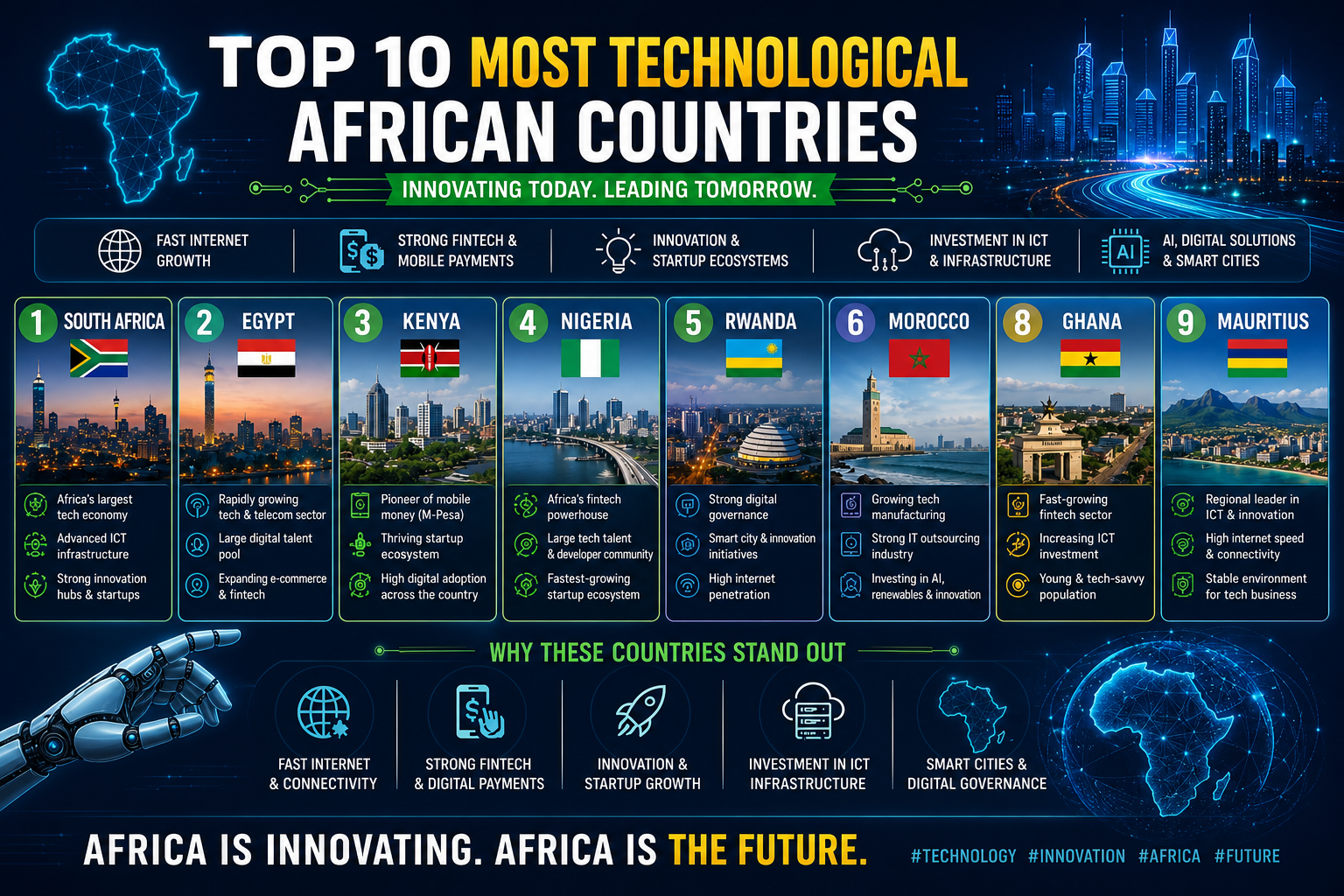
Kenya’s emergence as Africa’s leading innovation economy is often explained through startup success stories or mobile-money adoption statistics, but the deeper reality is far more structural. Over the past fifteen years, the country has methodically built a financial and regulatory ecosystem capable of supporting scalable innovation, institutional investment, and broad financial participation. What makes Kenya distinctive is not simply technological enthusiasm, but the alignment between infrastructure, supervision, and grassroots financial access.
According to financial inclusion surveys supported by the Central Bank of Kenya and national statistics agencies, digital payment penetration now reaches the overwhelming majority of adult users, enabling seamless everyday transactions across both urban and rural economies. This widespread digital access reduces operational friction for businesses, improves transaction transparency, and allows lenders to assess repayment behavior with far greater accuracy than in most emerging markets.
Regulation as the Hidden Advantage
While technology often captures public attention, investors consistently cite regulatory continuity as the true foundation of Kenya’s financial credibility. Banking supervision frameworks, reporting transparency, and structured monetary policy management have steadily strengthened. Publications from the International Monetary Fund and World Bank repeatedly identify governance predictability as one of Kenya’s primary investment stabilizers.
For long-term capital providers, this regulatory maturity lowers sovereign risk perception and allows multi-year lending strategies to operate with greater confidence.
Why Grassroots Credit Still Drives Real Growth
Yet even the strongest digital economy cannot function sustainably without trusted local lending institutions capable of translating financial inclusion into productive enterprise. Kenya’s cooperative financial sector plays this stabilizing role by channeling savings directly into small-business growth, agricultural activity, and household economic expansion.
Afresa Sacco’s Strategic Role
Within this layered ecosystem, Afresa Sacco operates as a direct transmission channel between national financial modernization and community-level opportunity. By mobilizing structured member savings and extending disciplined micro-loans into semi-urban and rural markets, the institution ensures that digital financial access results in measurable economic activity rather than dormant accounts.
As national payment systems accelerate and banking infrastructure deepens, Afresa benefits from improved liquidity circulation, faster disbursement mechanisms, and stronger member transaction histories, all of which strengthen credit discipline and operational resilience.
Lessons for Emerging Economies
For policymakers across Africa, Kenya’s model demonstrates that innovation ecosystems thrive not on technology alone, but on a three pillar alignment:
• Reliable financial supervision
• Deep digital transaction infrastructure
• Trusted community lending institutions
Where these pillars reinforce one another, financial innovation supports durable economic growth rather than speculative expansion cycles.
For investors assessing Kenya’s long-term trajectory, this institutional layering offers one of the strongest structural confidence signals available in any emerging market.
References:
World Bank — Kenya Economic Update
https://www.worldbank.org/en/country/kenya/publication/kenya-economic-update-keu
IMF — Kenya Country Reports
https://www.imf.org/en/Countries/KEN
Central Bank of Kenya — Publications & Banking Reports
https://www.centralbank.go.ke/publications/
African Development Bank — Kenya Economic Outlook
https://www.afdb.org/en/countries/east-africa/kenya
Kenya National Bureau of Statistics
https://www.knbs.or.ke/


.png)

.png)