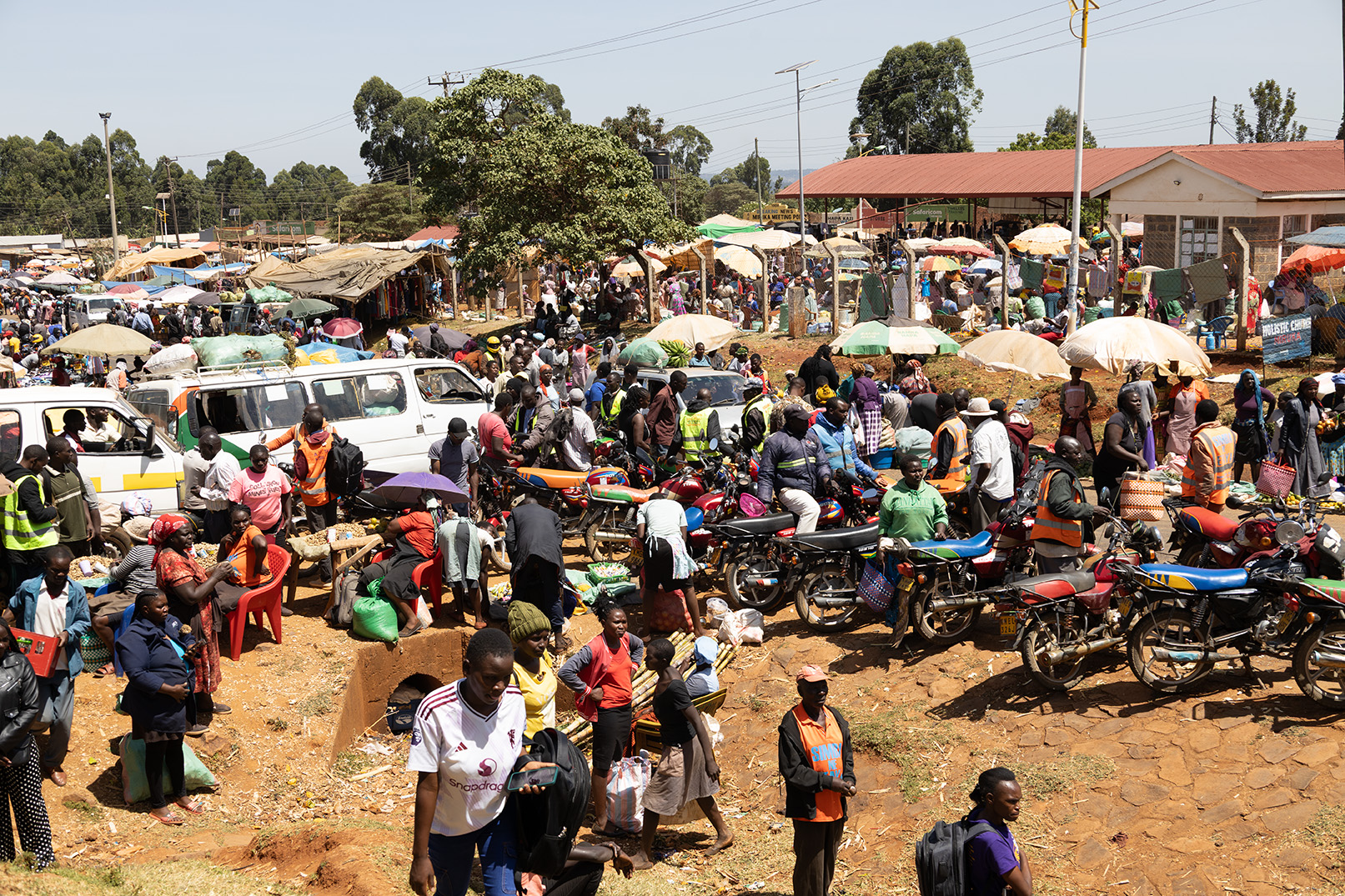
Africa’s small-business financing story is usually framed around what is missing: the billions of dollars that entrepreneurs cannot access, the businesses that remain outside formal finance, and the gap between demand for capital and the ability of financial institutions to provide it. But there is another way to look at the opportunity. Instead of starting with the financing gap, start with what is already moving.
InNova Global Fund currently reports approximately $125 million in microloans funded each month through its Kenyan partner platforms. Annualized, that is roughly $1.5 billion in lending activity. The figure is not an independently audited projection of annual lending, but it is a useful illustration of what happens when thousands of relatively small financing decisions are connected to a larger capital system.
The significance lies in the scale hidden inside the individual transaction. InNova reports an average microloan of about $19, with a minimum loan of $5. At that level, it is easy to think of each transaction as too small to matter. Yet when capital is repeatedly deployed across a large network of microenterprises, the aggregate becomes substantial.
This changes the way we should think about MSME finance.
A small business does not always need a large loan to create economic value. It may need enough working capital to buy additional stock, fulfil a larger order, purchase equipment, keep inventory moving or bridge a short cash-flow gap. The loan may be small, but the economic activity it enables does not necessarily remain small.
InNova’s model is built around this connection between capital and the businesses closest to the ground. InNova raises capital and sends it into a microloan pool through its Kenyan partner platforms. Those platforms issue loans to microenterprises and manage the local lending process, including the collection and reporting of portfolio activity. InNova itself provides the administrative and technological infrastructure that connects participant capital with those Kenyan lending platforms.
That distinction is important. The opportunity in African MSME finance is not simply about putting more money into the market. It is about building systems that can move capital efficiently, repeatedly and responsibly into businesses that conventional finance may struggle to serve.
The scale also points to a broader investment question. If $125 million can be funded through this type of lending activity in a single month, what might happen as technology, data, risk assessment and capital infrastructure continue to improve?
The answer does not mean every microenterprise will succeed, nor does it remove the risks inherent in lending. InNova itself notes that repayment is not guaranteed and that some borrowers may default.
But it does demonstrate something important: Africa’s MSME economy is far larger than the individual loans used to finance it.
The continent’s economic transformation will not be built only through billion-dollar infrastructure projects or a handful of technology companies attracting major venture rounds. It will also be built through millions of smaller transactions that allow traders, farmers, manufacturers, retailers and service businesses to keep expanding their economic activity.
That is why the $125 million monthly figure deserves attention. Annualised to roughly $1.5 billion, it offers a glimpse of what small-ticket finance can become when capital, technology and local lending networks operate at scale.
The real opportunity may therefore be bigger than the size of any individual loan.
It may be the system created when millions of small businesses finally have a financial system capable of meeting them where they are.
References:
International Finance Corporation (IFC), August 4, 2026: IFC Supports Expansion of Financing for Kenya’s Small Businesses through the First Catalytic First Loss Guarantee Transactions in Africa. Primary source for the $24.2 million IFC commitment, approximately $120.2 million in additional lending, $144.4 million in total expected lending and the 11:1 target leverage ratio. https://www.ifc.org/en/pressroom/2026/ifc-supports-expansion-of-financing-for-kenya-s-small-businesses-through-the-first
InNova Global Fund: How InNova Works. Primary source for the model connecting microlender capital with Kenyan partner platforms and the role of those platforms in issuing microloans and managing local lending activity. https://www.innovagf.com/how-innova-works
LinkedIn — Fintech Association of Kenya: Industry commentary on the IFC Catalytic First Loss Guarantee transactions, reviewed as supporting context for the significance of the announcement within Kenya’s financial https://www.linkedin.com/feed/update/urn:li:activity:7502689943513788417


.png)

.png)